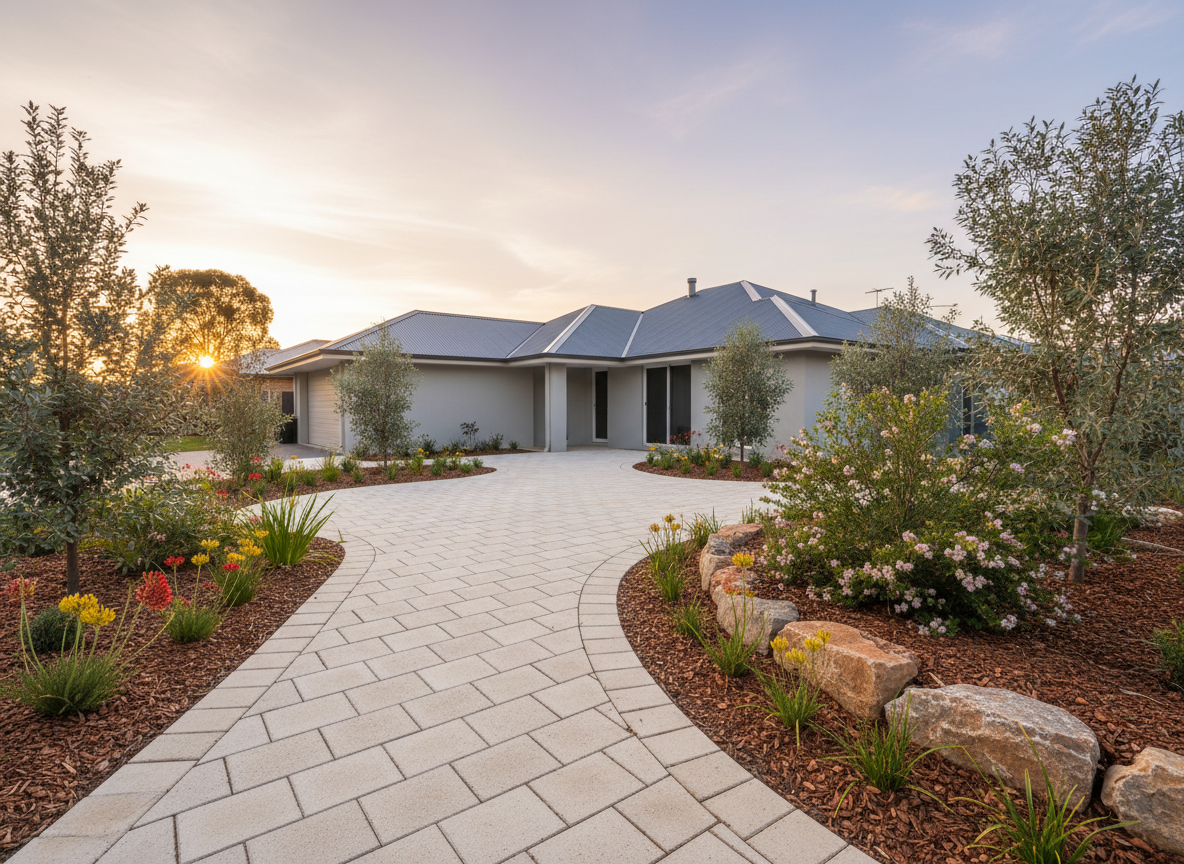
Who paving and landscaping in Perth suits
This work covers the hard surfaces, levels and walls built at the same time as the garden beds, so paths, patios and retaining fit the planting instead of working against it. It suits blocks with bare or uneven areas, a slope that needs terracing, or tired paving sitting beside beds you plan to replant.
Paving and garden beds working together
Setting the levels first decides where water runs, where beds sit and how steps fall. A patio laid against a raised bed needs that soil held back, and paving beside lawn or planting needs a firm edge that stays put in sandy ground. Planning both together saves lifting new pavers to fix a bed later.
Paver choices for Perth heat: the decision
Colour matters as much as material on a west facing patio. Pale limestone and travertine tend to stay more comfortable underfoot than dark pavers, and porcelain gives a dense, easy clean surface in light tones. Choose a textured finish where the area gets wet, and look at samples in afternoon sun first.
Limestone retaining on sloping blocks
Limestone blocks are a familiar sight in Perth retaining because the stone suits the local look and the sandy ground. On a sloping block, two or three lower terraces can be easier to use than one tall wall. Every wall needs drainage behind it so water cannot build up and push it forward.
Why council approval questions come up
Retaining walls usually raise more approval questions than paving, particularly taller walls and walls on or near a boundary. Requirements differ from one council to the next, so check with your local council early, before materials are ordered or soil is moved, and keep any advice you receive with your plans.
Your paving and landscaping next step
A licensed and insured local contractor can follow up when you request a free quote here. Before you do, measure the area to be paved, note the height of the slope or any wall you need, and save a few photos of pavers or limestone you like the look of.
Paving and Landscaping Services We Offer
✓Paving
Patios, paths and courtyards laid to the right falls, with paver colour and finish chosen for heat and wet areas.
✓Limestone Retaining Walls
Walls and terraces that hold back soil on a slope, built with drainage behind them and sized to the block.
✓Levelling for Sloping Blocks
Reshaping the ground into usable flat areas so paving, lawn and garden beds each have a stable level.
How it works
- 1
Look at the block
Walk the area and note where it slopes, where water pools after rain and which beds or trees are staying.
- 2
Choose the materials
Compare paver samples in afternoon sun and decide between limestone blocks and other retaining options to suit the look of the garden.
- 3
Check approvals
Ask your local council whether the planned retaining wall height or position needs approval, especially near a boundary.
- 4
Build in order
Levels, drainage and walls come first, then paving, then the garden beds and planting that finish the job.